

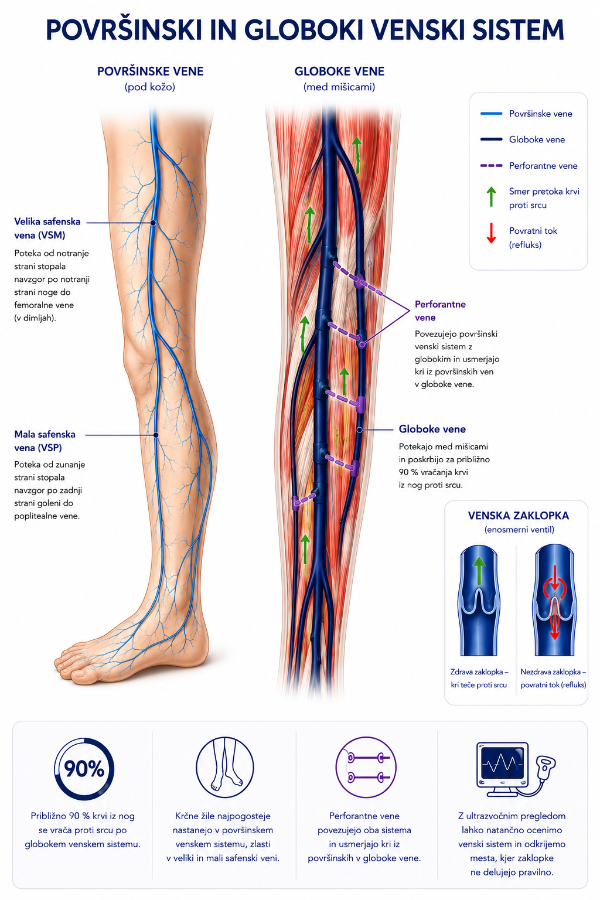
Chronic venous disease most often develops in the superficial venous system, even though most blood returns to the heart through the deep veins.
The venous system of the legs comprises superficial and deep veins, connected by perforator veins. Most blood from the legs—approximately 90%—returns to the heart through the deep venous system, while about 10% of venous flow passes through the superficial veins.
Nevertheless, it is in the superficial veins, especially the great and small saphenous veins, that venous valves most commonly fail and varicose veins develop. Perforator veins connect the two systems and direct blood flow from the superficial to the deep veins.
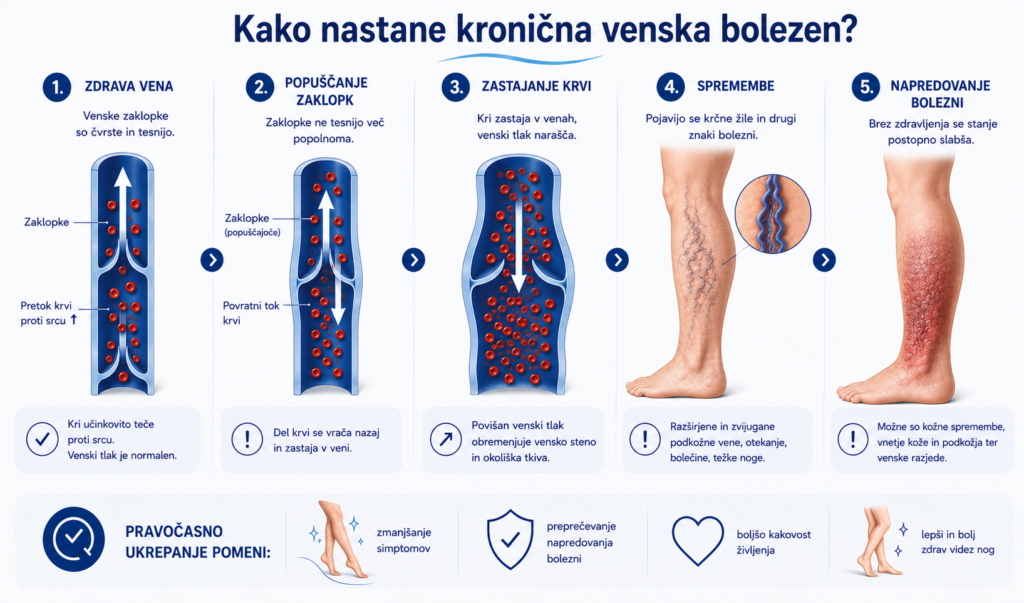
If the venous valves no longer close completely, blood also begins to flow back towards the foot. This is called venous reflux and is the fundamental mechanism behind the development of chronic venous disease.
Backward flow causes blood to pool and raises pressure in the veins. The veins then gradually dilate, which further reduces valve efficiency and worsens reflux. This creates a vicious cycle that leads to progressive disease.
Persistently raised venous pressure causes fluid to pass from the veins into the surrounding tissues, initially causing swelling. Over time, this triggers chronic inflammation and gradual changes in the skin and subcutaneous tissue; in advanced stages, venous ulcers may develop.
Chronic venous disease does not usually resolve on its own. Unless the cause is addressed, persistently raised venous pressure gradually produces increasingly severe changes in the vein wall and surrounding tissues, and symptoms become more pronounced.
Early recognition enables treatment before permanent changes of the skin and subcutaneous tissue develop. Modern minimally invasive surgical procedures effectively correct the cause of abnormal blood flow, reduce the risk of disease progression, and help prevent the most serious complications.